Testing response times of the top 74 brokerages
A study of 74 top brokerages reveals 41% never respond to website leads. Discover why response time matters and how AI assistants can help.



Since I work in the real estate tech industry, my friends often come to me with their real estate questions, since many of them are at the stage when they’re starting to think about buying their own place. Many still confuse me for a real estate agent, so they usually call with excitement, asking me questions like “Is it a good time to buy?” only to be completely let down by my response.
To cheer them up though (and save what’s left of our friendship), I offer to help them with their home hunt. I recently met up with my friend Sarah and helped her begin her online search. This is in keeping with the most widespread habits, since research indicates that 99% percent of millennials used online websites while searching for a new home.
After more than a few hours of searching, I was thrilled and relieved when she finally found a house that she really liked and was interested in visiting. “Great! Contact the brokerage ASAP,” I texted her.
The only options to contact the brokerage was either calling them or filling out an online form. Sarah looked a bit disappointed about having to settle for the phone call. She hadn’t done that in a while (millennials...), but she knew that filling out this form that looked straight out of the 1980’s wouldn’t get her anywhere. After she mustered up the courage and called, she was met with another disappointment: no one was there to answer.
It was this experience that got me thinking about two things:
- How difficult it must be for these brokerages to capture leads without the necessary tools
- How different it feels to shop online for a house on a real estate brokerage website versus buying something on Amazon
The big spend
In a 2024 study by Borrell Associates, real estate agents and brokers spent close to $32 billion on online advertising, a large percentage of which went into driving traffic to their websites.
If more 90% of millennials start their home buying process online, it’s only normal to spend money to get some of them to check out your brand and website.
The question is, however, what is actually happening on the website? How are the brokerages facilitating the jump from a digital interaction with a lead to an actual meeting?
Since many buyers look for houses after work hours and on weekends, how are those leads getting captured when there is no contact available at the brokerage?
I went back to work the next day and mentioned what had happened to the team at Roof. So we then decided to find out some answers. We wanted to see how well-equipped the top real estate brokerages were to capture those leads.
Using a "secret shopper,” we set out to contact the top 74 real estate brokerages in the U.S. to measure one thing:
How fast did the brokerages reply to their online website leads?
Why online website leads? Because these are the hottest online leads a business can get. The visitor is already on your website, familiar with your offer and your brand, and has made their intent clear.
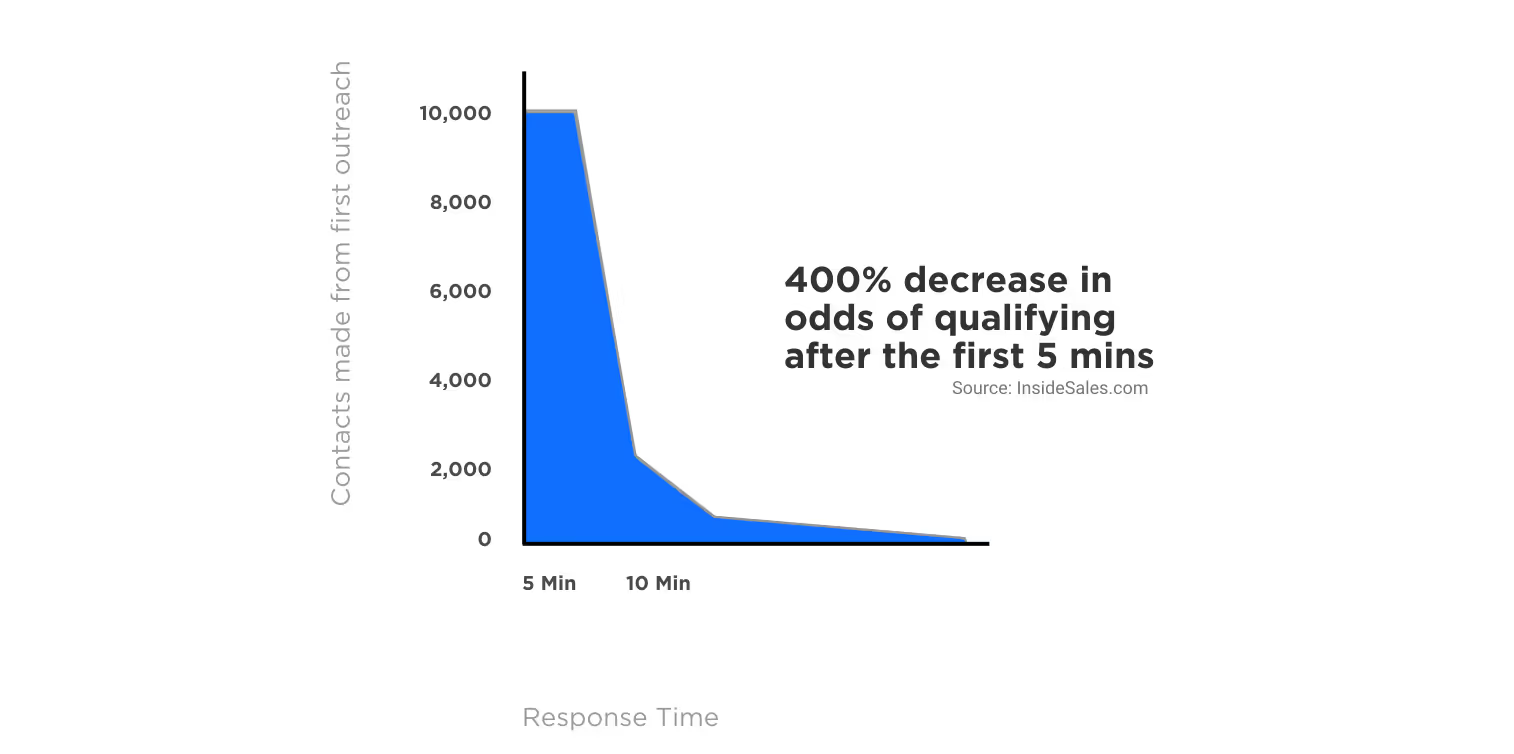
Why response time? Because in a HBR study of over 2,000 companies, researchers discovered that if companies don’t respond to a lead in less than five minutes, their chance of converting that lead decreases by 400%!
When agents and brokers are on track to spend nearly $32 billion in online advertising driving traffic to their websites, you’d expect a little bit of effort put in capturing and engaging with leads.
The results
The results we got made one thing clear: real estate brokerages – even the top ones – are lacking when it comes to capturing and responding to their website leads.
Actually, it was pretty bad.
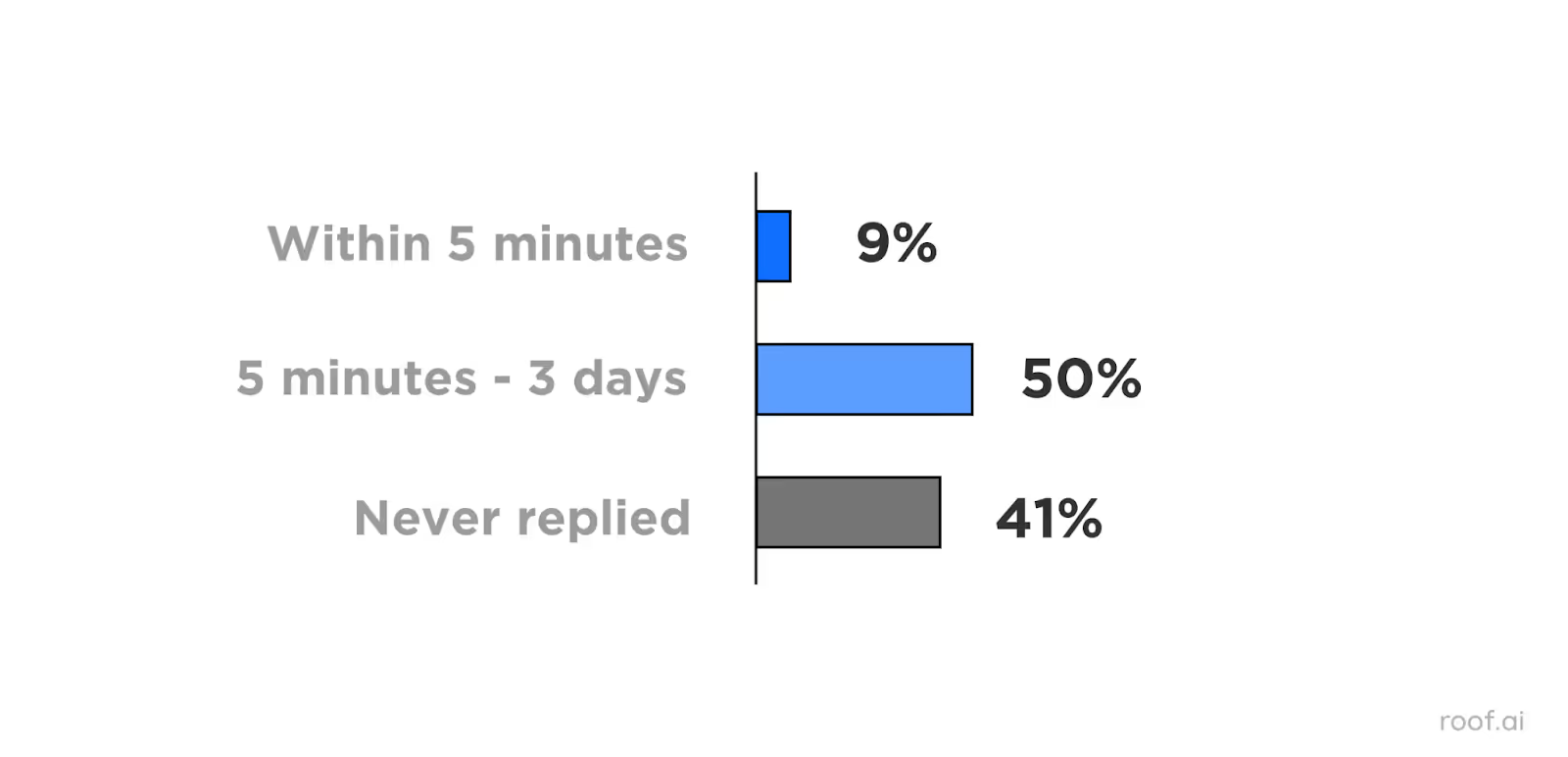
The results showed that of the brokerages we surveyed, 41% of them did not even respond to our inquiry. While only half responded within the 3 day time frame, only 9% responded within that crucial 5 minute window.
If you’re trying to fix this systematically, don’t just speed up the first reply – define ownership and follow-through. Our real estate lead management playbook outlines stages and SLAs that prevent leads from stalling after the initial response.
So why are most of the hottest real estate leads being ignored and not responded to?
It’s because the tools most brokerages are using do not help them capture the leads and respond in time. Of the leads we surveyed, 91% were using a static form to capture intent – their only method of communication available for a lead to contact a brokerage.
Why is that bad? Because studies show that the majority of people prefer other methods like instant messaging to communicate with a business.
But what happens after a lead submits a form? Their inquiry goes through a maze of a marketing/sales funnel. Take look:
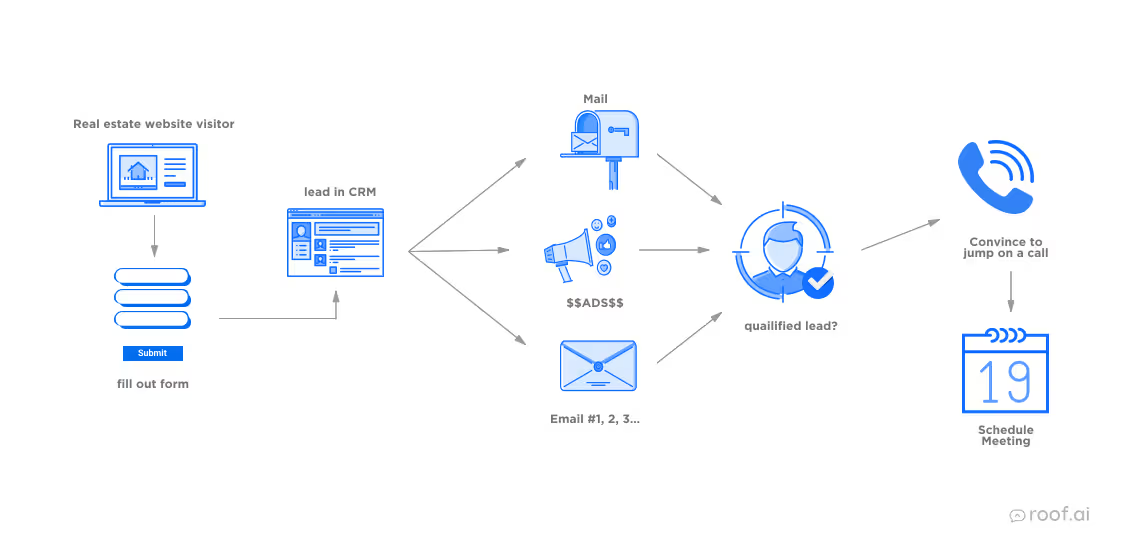
A lead visits a brokerage’s website and submits a form. Their info then goes into a CRM, which might have certain business rules that enforce routing that lead to an agent’s email – or it might just stay in the brokerage’s CRM. Once the lead is nestled in the system, a barrage of nurturing marketing emails start heading their way. These emails do more harm than good because they are often impersonal and don’t provide much value. Either that, or the lead has to wait until an agent has the time to respond to them.
This process isn’t streamlined, by the way. It’s full of delays and frictions, and by the time the lead gets an answer, they’ve already left the website and are probably dealing with your competitor.
A 400% decrease in chances of qualifying a lead after only 5 minutes of initial contact,
All this explains why so many agents and brokers have trouble converting online leads. If five minutes leads to a 400% decreased chance of qualifying a lead, imagine what five hours – or five days – would do!
The winners
Only 7 brokerages were able to respond within the magic 5 minute window. All of these brokerages had one thing in common: a chatbot on their website.
That’s why they were able to respond that fast. No forms, no back and forth emails, no lead routing – just straight up, one-to-one conversations. They were able to do so in such a short period of time because their funnel looked something like this:
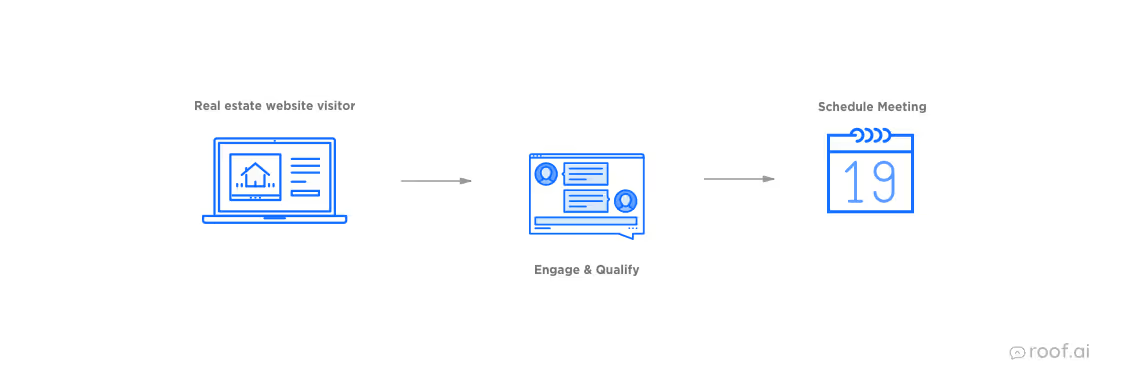
Come to think about it, this is how actual people engage in real life.
Imagine you’re out shopping. Once you enter a store, you expect the sales rep to welcome you and help you out with whatever you need. They may even start a conversation with you regarding what you’re looking for in order to help.
They won’t, however, shove a form in your face to fill out, make you leave the store, and then call you back after 3 days and tell you to return. Doesn’t make sense, right?
The best time to convert a visitor to a lead is with one-to-one conversations when they are live on your website – not after they’ve browsed, filled out a static form, and left.
The focus on customer experience
In another post, we talked about the shift that's happening in the real estate industry and how several brokerages and other real estate companies are reacting to that shift.
We’re seeing the companies that focus on owning their audience and the demand, win.
What do “disruptive” companies such as Amazon, Zillow, and Redfin have in common? They focus on their customers as their north star and shift the whole buying experience to favor them.
So how can you, as a real estate brokerage, focus on improving your customer experience online? Start by resolving the communication flaws between you and your leads that result in slow response times:
- Adopt a conversational marketing mindset and integrate messaging into your website and business.
- Invest in tools that allow you to have 1-to-1 conversations with your website visitors at scale.
- Always be close to your customers. It’s this close proximity that will help you enhance the customer experience and increase your brand loyalty, ultimately beating your competition.
If slow response times are costing your brokerage leads, Roof AI helps you engage visitors the moment they show intent before they leave your site or move on to a competitor. Learn more today.